Learn · Selective laser sintering
Vapor smoothing for SLS parts.
SLS prints tough nylon parts with no supports, from desktop systems to industrial machines. SLS vapor smoothing closes their porous surface, so parts seal, clean and look finished, with almost no change in size. PostPro systems vapor smooth SLS parts in PA12, filled PA12, PA11 and polypropylene.
No cost to evaluate · Parts returned · Typical turnaround 2–3 weeks
Why SLS parts need finishing
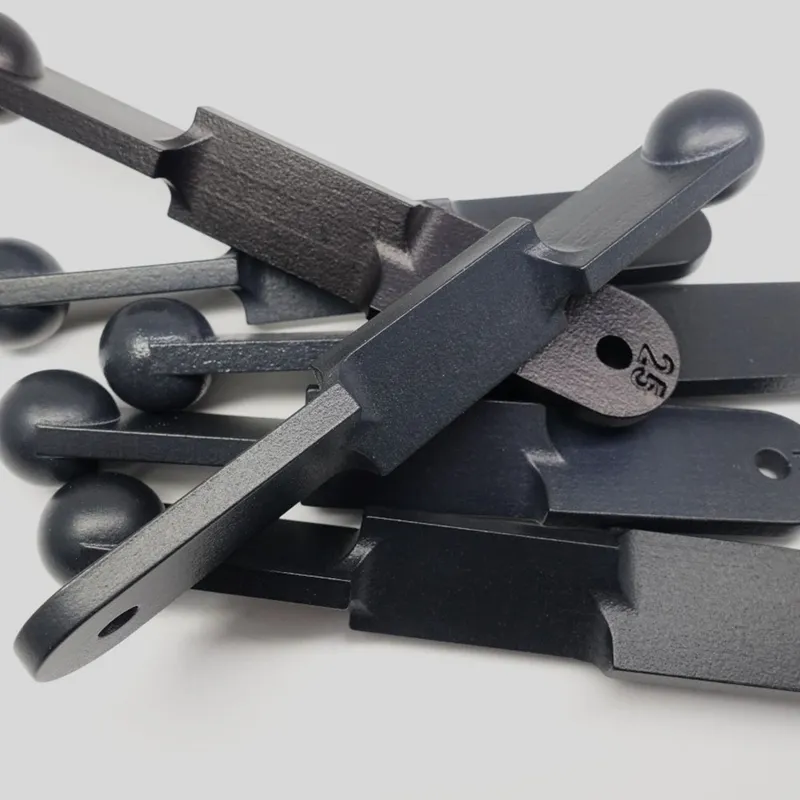
Laser-sintered nylon, with an open surface.
SLS nylon parts come out of the powder grainy and porous, which limits them wherever a part must seal, clean or look finished.
Sealed
Reflowing the surface closes its pores, so parts take up less water and dirt and can hold more pressure.
Accurate
The skin reflows, not the whole part, so fits and features keep their size.
Desktop to industrial
The SFX and SF2X sit beside desktop SLS printers; the SF50 and SF100 take industrial build volumes.
Studied on desktop SLS
AMT and Formlabs published a joint study of vapor smoothing on Formlabs SLS powders.
Published results
What vapor smoothing does to SLS parts.
The best results AMT has published for vapor-smoothed SLS parts. Results depend on the material and finishing agent used.
Surface roughness
up to −71%
Against as-printed parts
Dimensional change
≤ 0.4%
After vapor smoothing
Burst pressure
up to +7%
A sealed surface holds more pressure
SLS PA2200 whitepaper Formlabs SLS study Arkema PA11 SLS whitepaper
In production
SLS parts, smoothed and tested.
A production film and two published studies on vapor-smoothed SLS parts.
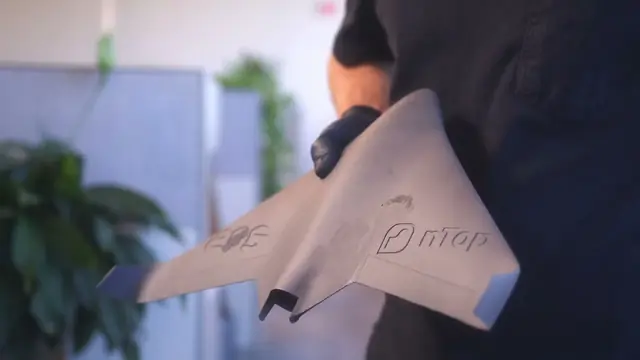
Avid Product DevelopmentFilm
Drone parts from EOS SLS (film, opens YouTube in a new tab)
Printed on EOS SLS and vapor smoothed on a PostPro SF100: sealed against the elements, easier to clean, closer to an injection-molded finish.
HansgroheWhitepaper
SLS PA2200 performance
Roughness, burst pressure and dimensional change on vapor-smoothed SLS PA2200 parts.
FormlabsWhitepaper
Desktop SLS surface quality
A joint study of vapor smoothing on Formlabs SLS powders, for a consistent, semi-glossy finish.
Materials and systems
Which agent, which PostPro.
Nylons run with FA5802 (Pure) or FA326; polypropylene with FA9202. Every PostPro system lists PA12 and PA11: desktop systems next to desktop SLS, industrial systems for full builds.
SLS materials by finishing agent
| Material | FA5802 (Pure) | FA326 | FA9202 |
|---|---|---|---|
| PA 12 | Listed | Listed | Not listed |
| PA 12 Filled | Listed | Listed | Not listed |
| PA 11 | Listed | Listed | Not listed |
| Polypropylene (PP) | Not listed | Not listed | Listed |
Listed by AMT— Not listedFA5802 (Pure) runs in every PostPro system; FA326 (High performance) on the SF50 and SF100; FA9202 for polypropylene.
PartnerIn April 2026, Raise3D announced a partnership with AMT to offer PostPro vapor smoothing to its RMS220 SLS customers in Europe.
Can SLS nylon parts be vapor smoothed?
Yes. SLS PA12, filled PA12 and PA11 run with FA5802 (Pure) or FA326, and SLS polypropylene with FA9202.
How much do SLS parts change dimensionally?
Very little: ≤ 0.4% in AMT’s published SLS test. Results depend on the material and finishing agent used.
Do filled SLS powders smooth?
Filled PA12 grades from SLS are listed with FA5802 (Pure) and FA326. Send a part in your grade to confirm the finish.
Which PostPro suits a desktop SLS printer?
The desktop Desktop vapor smoothing for R&D and low-volume production. The SF2X doubles its chamber; the SF50 and SF100 take industrial volumes.
Next step
See the price. Run the numbers. Hold the part.
Starting prices are public and the cost-per-part math is yours to check, with no email needed for either. The free benchmark puts your own parts, vapor smoothed, in your hands.
-
01Quote
Build your quote
Pick a system and its options, and send AMT an itemized quotation request. Each system shows its starting price.
-
02ROI
Calculate your ROI
Compare your cost per part with manual finishing, using your own labor rate and volumes. Every assumption is editable.
-
03Benchmark
Test your parts, free
Ship us your parts with a prepaid label. We vapor smooth them and send them back with before-and-after photos and a benchmark report.
No cost to evaluate · Parts returned · Typical turnaround 2–3 weeks
Prices: starting prices, excluding tax and shipping; everything else is priced in your quotation.
Not sure which system? Help me choose