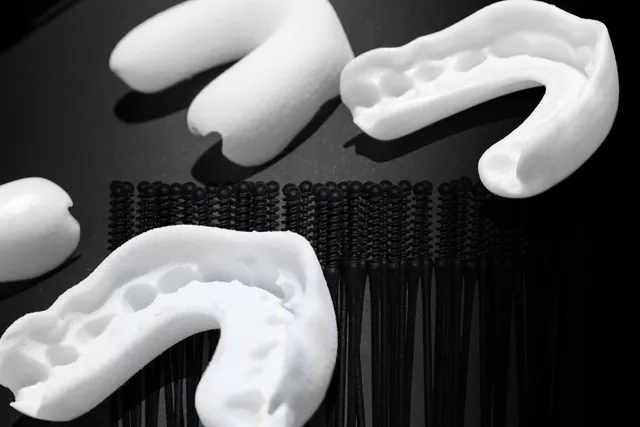
3D-printed mouthguard-shaped parts and black lattice parts on a dark surface

Applications · Medical & health

Prostheses and orthoses patients want to wear.

Vapor smoothing seals and smooths 3D printed polymer parts, so devices worn against the skin are comfortable, easier to keep clean and finished like a premium product. Prosthetics and orthotics makers vapor smooth powder-bed parts, most often from HP Multi Jet Fusion and SLS printers, in PA11, PA12 and TPU.

Key applications

Where medical parts are vapor smoothed.

  • Dental and intraoral parts

    Tested for dental use: PA11 for cytotoxicity and PA12 for antibacterial activity, both printed on HP MJF.

Printers and materials

The printers and materials behind these parts.

Print processes

MJF and SLS, plus SAF and HSS for PA12

PostPro smooths parts from MJF, SLS, SAF, HSS and FDM.

Case studies

Two stories from medical & health.

Each case study is the customer’s published account: the summary here, the full story and the PDF one click away.

  1. Case study 01 / 02
    Partial hand prosthesis under running water

    Partial hand prostheses patients want to wear

    Point Designs prints each partial hand prosthesis to fit one patient, then vapor smooths it on a PostPro SFX for a sealed, comfortable surface and a premium finish.

    Customer
    Point Designs
    Process
    HP MJF → PostPro SFX
    Result
    Smooth, sealed surfaces that improve comfort and hygiene
    Published
  2. Case study 02 / 02
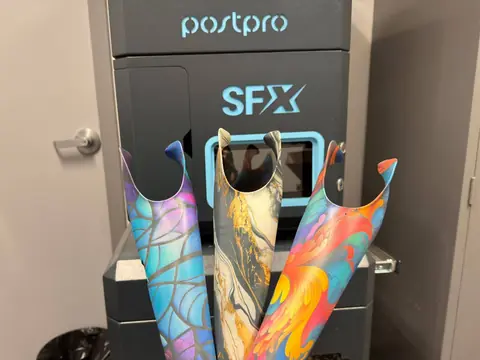
    Custom-printed prosthetic covers beside a PostPro SFX

    Comfort and hygiene in upper limb prosthetics

    The clinic combines HP Multi Jet Fusion printing with PostPro vapor smoothing so devices worn every day are comfortable, easier to keep clean, and can carry custom colors and graphics.

    Customer
    Atlantic Clinic for Upper Limb Prosthetics
    Process
    HP MJF → PostPro vapor smoothing
    Result
    A sealed, low-friction surface: more comfort, better hygiene, more resistance to wear and staining
    Published

Medical on video

See it at work

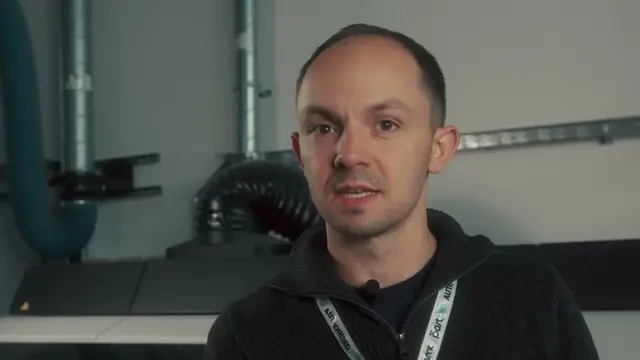
How Vapor Smoothing Improves Comfort and Hygiene in 3D-Printed Orthotics

Watch on YouTube (opens in a new tab)

Next step

See the price. Run the numbers. Hold the part.

Starting prices are public and the cost-per-part math is yours to check, with no email needed for either. The free benchmark puts your own parts, vapor smoothed, in your hands.

  1. 01Quote

    Build your quote

    Pick a system and its options, and send AMT an itemized quotation request. Each system shows its starting price.

    Build your quote

  2. 02ROI

    Calculate your ROI

    Compare your cost per part with manual finishing, using your own labor rate and volumes. Every assumption is editable.

    Calculate ROI

  3. 03Benchmark

    Test your parts, free

    Ship us your parts with a prepaid label. We vapor smooth them and send them back with before-and-after photos and a benchmark report.

    Test your parts, free

    No cost to evaluate · Parts returned · Typical turnaround 2–3 weeks

Prices: starting prices, excluding tax and shipping; everything else is priced in your quotation.

Not sure which system? Help me choose

Questions

Questions, answered.

Can vapor-smoothed parts be worn against the skin?

Prosthetics and orthotics makers vapor smooth devices for exactly that. Orthobroker reports smooth, non-abrasive surfaces for better skin contact, and the Atlantic Clinic a sealed, low-friction surface that improves comfort.

Does vapor smoothing make medical devices easier to keep clean?

A raw print is porous and can trap contaminants. Vapor smoothing seals the surface: Orthobroker reports sealed finishes that prevent sweat absorption and bacteria growth.

Has vapor smoothing been tested for cytotoxicity?

Yes: AMT has published a cytotoxicity test for parts finished with FA5802 (Pure). The result, with the material tested, is in the published test results. A test result applies to the parts tested; it is not a biocompatibility or medical-device certification.

Which printers and materials do prosthetics and orthotics makers use?

Most often HP Multi Jet Fusion and SLS printers, in PA11, PA12 and TPU; PA12 parts also come from SAF and HSS printers. Orthobroker, for example, prints its orthoses in HP PA11 and TPU on HP Multi Jet Fusion.

Which PostPro system suits a clinic or orthotics lab?

Clinics and labs often start on the desktop PostPro SFX; for production volumes there are the industrial PostPro SF50 and SF100.

Can I test my own parts before I buy?

Yes. Send a few of your printed parts to AMT’s benchmarking program and they come back vapor smoothed: no cost to evaluate, parts returned, typical turnaround 2–3 weeks.