Applications · Machined plastics
Vapor polishing for CNC-machined plastics.
Vapor polishing (also spelled vapour polishing) is a chemical finish for machined plastic parts. A controlled solvent vapor softens the outer skin of the part, so tool marks and fine scratches flow out and the surface comes back smooth and glossy, with no abrasives. AMT runs it on the PostPro SF100 with PostPro Pure1, automated, in a closed chamber that recovers the consumable.2
No cost to evaluate · Parts returned · Typical turnaround 2–3 weeks3
Confirmed by AMT for the PostPro SF100 with PostPro Pure1
What it does
A machined finish, reflowed instead of rubbed.
A cutter leaves a surface of tiny ridges and scratches. Abrasives flatten them one face at a time. Vapor polishing melts the very top of the surface for a moment, so it levels itself, on every face the vapor reaches at once.
Clarity back on clear plastics
On polycarbonate and acrylic a machined face scatters light and looks frosted. Reflowing the surface lets light pass through cleanly again, so a lens, light pipe or sight glass works as drawn.
Tool marks out, every face at once
Feed marks, fine scratches and soft burr edges level out across the whole part in one cycle, with no buffing wheel, compound or polishing cloth.
Inside bores and channels
A vapor reaches cross-drilled holes, bores and internal channels that a wheel, a cloth or a flame cannot. PostPro systems finish parts inside and out.2
A surface that wipes clean
A smooth skin gives fluids and residue less to hold on to, which matters on manifolds, fluid-handling parts and housings that are cleaned often.
| Question | Vapor polishing PostPro SF100 + Pure | Flame polishing Torch on edges | Hand polishing Abrasives, buffing | Open solvent vapor Manual, improvised |
|---|---|---|---|---|
| How it works | Controlled vapor in a closed chamber reflows the surface skin; the machine recovers the consumable.2 | A flame melts the surface of an edge as the torch passes. | Abrasives and polishing compound remove and flatten material. | Parts are held over or dipped into an open solvent. |
| Internal features | Reached by the vapor | Line of sight | Line of sight | Partly |
| Whole part at once | Yes, a batch per cycle | Edge by edge | Face by face | Part by part |
| Operator | Load the rack, start the cycle on the touchscreen.4 | Skilled hand; heat can bubble, warp or stress the part. | Skilled hand; time grows with every face. | Works in solvent vapor; fire and exposure controls needed. |
| Best for | Repeat batches of machined parts, complex geometry, clear and opaque plastics. | Straight acrylic edges. | One-offs and large flat faces. | Not recommended: see the solvent section below. |
YesPartlyNo
Materials
Six machined plastics, one process.
-
Polycarbonate (PC)
Tough, clear and impact resistant. Cutting leaves a frosted, tool-marked face; vapor polishing reflows it so the part is see-through again, without polishing each face by hand.
- Machined into
- Guards, covers, lenses, light pipes, sight glasses, fluid manifolds
- Why polish
- Clarity, tool-mark removal, a surface that wipes clean
-
Acrylic (PMMA)
The clear plastic of light guides, display parts, lenses and lab and fluidic blocks. Machined edges and channels come off the cutter hazy; vapor polishing returns them to a clear, glossy finish in one pass.
- Machined into
- Light guides, lenses, display parts, fluidic and lab blocks
- Why polish
- Edge and channel clarity, a finished look on every face
-
ABS
Machined into housings, enclosures, fixtures and prototypes that have to look like molded production parts. Vapor polishing takes out cutter marks and leaves an even, glossy surface.
- Machined into
- Housings, enclosures, fixtures, prototype parts
- Why polish
- A molded-looking finish, easier cleaning
-
Polysulfone (PSU)
A tough, heat-resistant engineering plastic with a clear amber tone, machined into manifolds, fluid-handling parts and housings that are cleaned often. A reflowed surface gives residue fewer places to sit and shows the part’s clarity.
- Machined into
- Manifolds, fluid-handling parts, housings, covers
- Why polish
- Clarity, a smooth surface that is easy to clean
-
PEI (ULTEM™)
A high-heat, inherently flame-resistant engineering plastic, machined into electrical, fluid-handling and transport-interior parts. AMT lists PEI with PostPro Pure for machined parts, and processes it on the SF100.
- Machined into
- Electrical insulators, connectors, manifolds, interior parts
- Why polish
- Tool-mark removal, a uniform finish on complex geometry
-
Nylon (PA)
Machined into gears, bushings, rollers and wear parts. Nylon is also home ground for PostPro: PA12 and PA11 3D printed parts run on every PostPro vapor smoothing system.2
- Machined into
- Gears, bushings, rollers, wear strips, fixtures
- Why polish
- A smoother running surface that is easier to clean
Your partNot on the list, filled, or glass-loaded? Results depend on the grade, the geometry and how the part was machined. Talk to an engineer about your machined parts.
Solvents
Why switch from MEK and methylene chloride.
Classic vapor polishing runs on harsh solvents such as methylene chloride and MEK, often in an open setup. The first is now restricted for most uses, and the second needs fire and exposure controls wherever it is used. PostPro Pure is combustible too, but it runs inside a closed machine.
-
Classic solvent
Methylene chloride
Dichloromethane (DCM)
- United States
- Most industrial and commercial uses are prohibited under the EPA’s 2024 final rule under TSCA. The uses that remain need a Workplace Chemical Protection Program.
- EU and UK
- Restricted under REACH: paint strippers that contain it may not be sold to the general public, and professionals need specific training to use them.
- In short
- Restricted and being phased out for most uses. Not banned everywhere, but a process that depends on it carries regulatory risk.
US EPA: Risk Management for Methylene Chloride (opens in a new tab) · HSENI: Dichloromethane (opens in a new tab)
-
Classic solvent
MEK
Methyl ethyl ketone, also called butanone
- Status
- Not banned. A flammable liquid (NIOSH class IB) with workplace exposure limits set by OSHA and NIOSH.
- What it takes
- Ventilation or extraction, ignition control and trained staff wherever it is handled in the open.
- In short
- Legal to use, but a harsh, flammable solvent that adds controls to every open polishing station.
-
PostProFA58025
PostPro Pure: a greener alternative
On the PostPro SF100
NoteRegulatory status summarized from the agency pages linked above, read October 2026. Rules differ by country and change over time; this is not legal advice.
How it runs
One automated cycle on the PostPro SF100.
Hang the parts on a rack, close the door, start the recipe. The SF100 runs the same four stages it uses for 3D printed parts, with a recipe set for your machined parts.
Conditioning
Parts are conditioned in the chamber to reach the right processing conditions.
Processing
Vaporized consumable is injected into the chamber and smooths part surfaces under controlled conditions.
Curing
The consumable is removed from the surface and the surface resolidifies.
Drying
Parts are dried so no consumable remains in the chamber, ready for use.2

Cycle time for machined parts
AMT sets the recipe for each machined part and material with you, so the cycle time is quoted for your parts rather than taken from the 3D printing figures. Send a part, or ask an application engineer.
Ask about cycle times for your parts
PostPro SF100 · list price from
$155,050
AMT list price · indicative · confirmed in your formal quote · excluding tax and shipping
On video
See it polish acrylic
Nothing loads from YouTube until you press play.
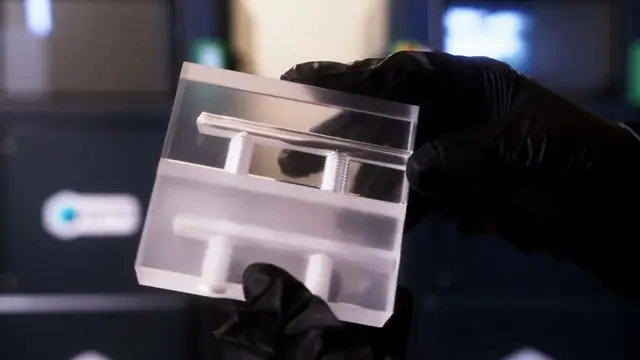
Automatic Vapor Polishing: Acrylic PMMA
Vapor polishing a machined acrylic (PMMA) part automatically: the machined surface comes out clear without hand polishing.
Watch on YouTube (opens in a new tab)Questions
Vapor polishing machined plastics: questions.
Short answers from AMT’s published data and the agencies linked on this page. Anything else, ask an engineer.
What is vapor polishing?
Vapor polishing is a chemical way to polish plastic parts. A controlled solvent vapor softens the outer skin of the part so tool marks and fine scratches flow out, leaving a smooth, glossy surface without abrasives. On clear plastics it brings back transparency after machining.
Is vapor polishing the same as vapor smoothing?
They work the same way: a controlled vapor reflows the surface of a thermoplastic part. Machine shops call it vapor polishing when they finish machined parts; AMT calls it vapor smoothing on 3D printed parts, where it also seals the surface. The PostPro SF100 does both.
Which machined plastics can PostPro vapor polish?
Can vapor polishing restore clarity on machined polycarbonate and acrylic?
Yes, and that is the main reason clear parts are vapor polished: the reflowed surface lets light through instead of scattering it. AMT polishes polycarbonate and acrylic on the PostPro SF100 with PostPro Pure1. Send a part to see the result on your own geometry.
Does vapor polishing change the dimensions of a machined part?
The surface skin reflows, so very fine features and sharp edges can soften a little; how much depends on the material, the geometry and the recipe. AMT has not published dimensional data for machined parts yet, so send a part with its critical dimensions and an engineer will check them with you.
Is methylene chloride banned?
Not everywhere, but it is heavily restricted. In the United States, the EPA’s 2024 rule under TSCA prohibits most industrial and commercial uses and requires a Workplace Chemical Protection Program for the uses that remain. In the EU and UK, paint strippers that contain it are restricted under REACH.
Is MEK banned?
No. MEK (methyl ethyl ketone) is legal to use, but it is a flammable liquid with workplace exposure limits, so open use needs ventilation, ignition control and trained staff.
Can I test my machined parts first?
Yes. Send them to the PostPro benchmark: No cost to evaluate · Parts returned · Typical turnaround 2–3 weeks.3
Free benchmark
Send us a machined part. We’ll send it back polished.
The quickest way to judge clarity and finish is to hold your own part. Ship it with a prepaid label; AMT polishes it and sends it back with before-and-after photos and a report.
No cost to evaluate · Parts returned · Typical turnaround 2–3 weeks3