Learn · Guide
How to smooth 3D prints: a guide to the main methods
Most 3D-printed parts need some finishing to go from raw output to a polished, end-use product. This guide explains why, and compares the main ways to smooth 3D prints: sanding, tumbling and chemical vapor smoothing, manual and automated.
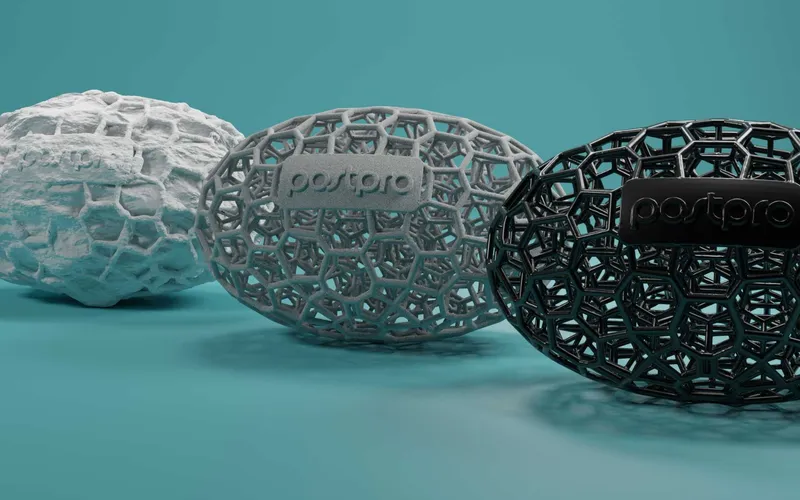
Parts made by fused deposition modeling (FDM) typically show layer lines: the visible marks each deposited layer leaves, which affect both how the part feels and how it looks. Parts printed by selective laser sintering (SLS) or Multi Jet Fusion (MJF) have a rough, unsealed surface instead. That texture detracts from the look and can limit function wherever a smooth or sealed surface matters.
Smoothing addresses these imperfections. Sanding, abrasive smoothing, vapor smoothing and surface treatments all bridge the gap between a printed object and a usable, finished product, manually or in automated systems.
Why smooth 3D prints?
Surface roughness is often the biggest obstacle to using 3D-printed parts in end-use applications. On FDM parts, layer lines show as ridges that lower the quality of the finish and change how the part feels in the hand.
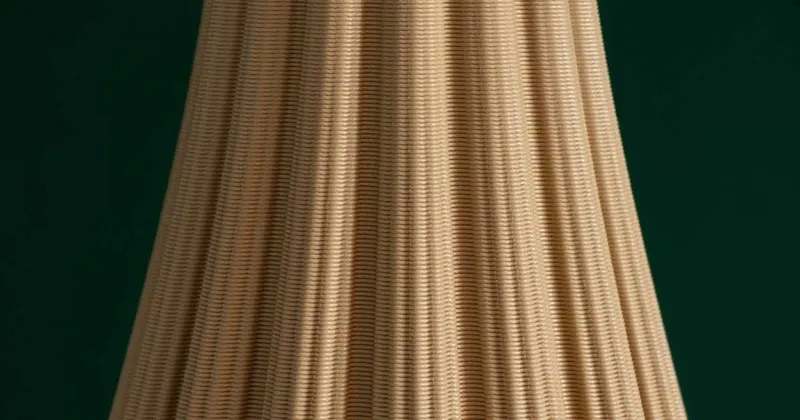
SLS and MJF parts have a distinctly rough surface of peaks and troughs. Their surfaces are also typically unsealed, which leaves them open to degradation: UV exposure can weaken the material, the rough, porous surface can harbor bacteria, and unsealed parts tend to absorb liquids, which can compromise their integrity and life.
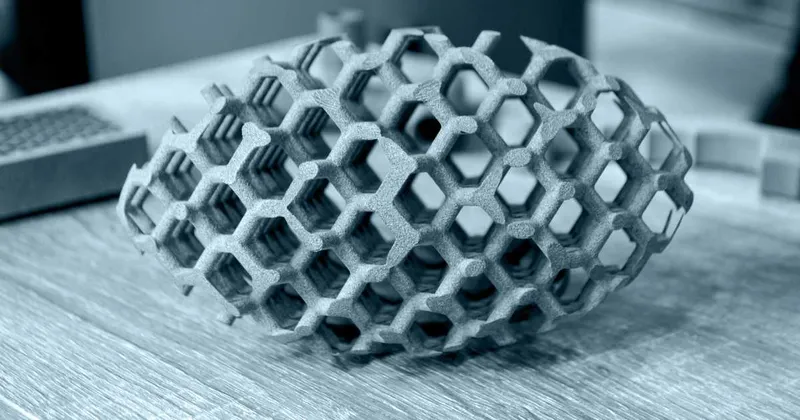
Post-processing methods range from simple manual techniques to automated processes. The right one depends on the part’s intended use, the smoothness required and the material, and some parts combine several methods.
Sanding
Sanding is one of the most widely used finishing techniques, valued for its simplicity. It uses a sanding block or sandpaper, starting with coarse grits to remove larger imperfections and moving to finer grits for a smooth finish.
It suits FDM prints, where layer lines are pronounced. But sanding is manual, labor-intensive and slow, and the consistency of the result depends on the operator’s skill: it takes a steady hand to get a uniform finish without over-sanding or creating uneven surfaces.
Tumbling
Tumbling machines use the abrasive action of media such as ceramic, metal or plastic pellets. Parts tumble with the media, and the friction gradually smooths imperfections into a more uniform finish. It works well on the rough surface typical of SLS prints.
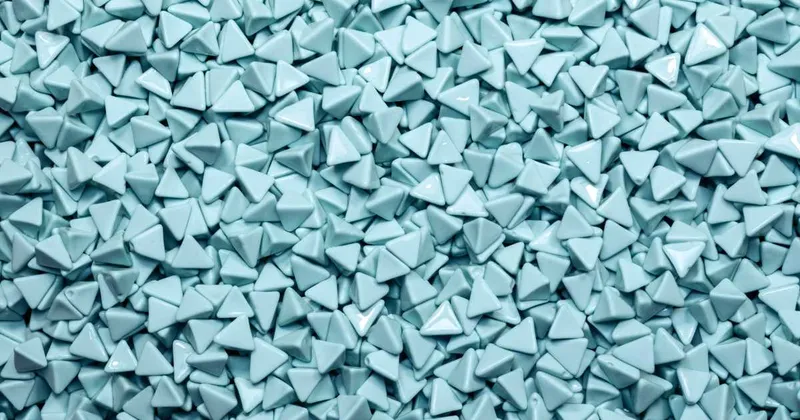
Tumbling has limits. The abrasion does not distinguish between features and imperfections, so it can wear away small, delicate details. And the media cannot always reach internal channels and cavities, which stay unpolished.
Chemical vapor smoothing
Chemical vapor smoothing comes in manual and automated forms, with very different applications and safety considerations.
Manual: acetone vapor smoothing
For FDM parts in ABS (acrylonitrile butadiene styrene), acetone vapor smoothing is common. The part is exposed to acetone vapor, which dissolves its uppermost layer and evens out visible layer lines. It works on ABS because of its chemistry. More chemically resistant plastics, such as polyamides (PA), polypropylene (PP), polylactic acid (PLA), thermoplastic polyurethane (TPU) and thermoplastic elastomers (TPE), do not react to acetone the same way.
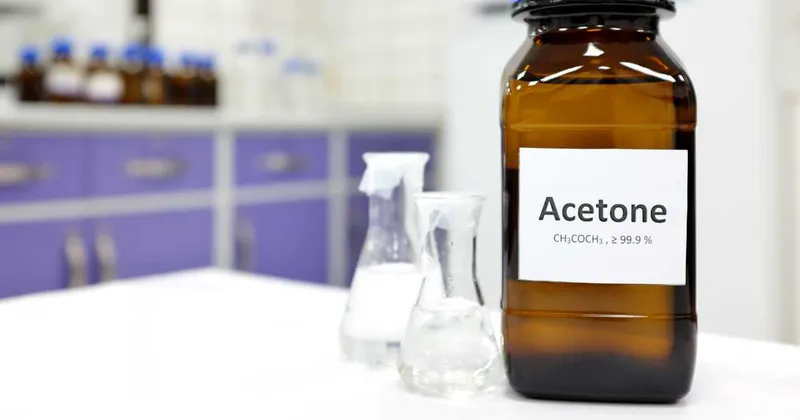
Acetone vapor smoothing is a hazardous process. Acetone is flammable and volatile, and inhaling its vapor is a health hazard (more on acetone exposure). Wear personal protective equipment at all times and work in a well-ventilated area.
Automated vapor smoothing systems
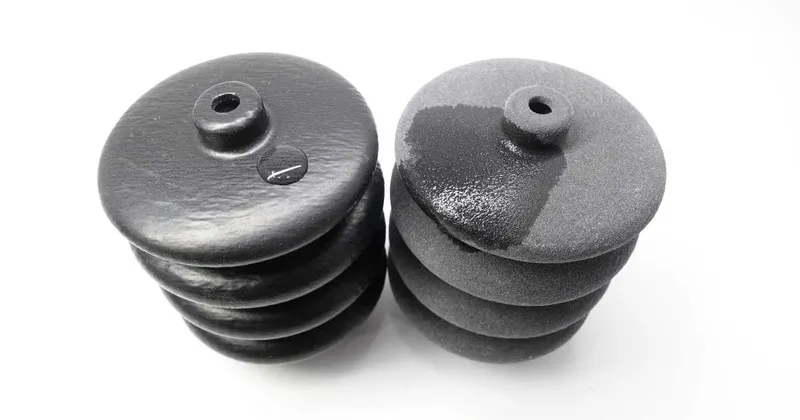
Automated vapor smoothing takes place in a closed-loop system, usually under vacuum. The solvent is heated to its boiling point, and the vapor fills the processing chamber that holds the parts. It condenses on the part surfaces and reflows the material rather than removing it. Because the technique is non-abrasive, delicate features survive and dimensional change stays small: ≤ 0.4%12024 in AMT’s tests on voxeljet HSS PA12.
The improvement in surface quality is large. On BASF Ultrasint TPU01 parts, for example, surface roughness went 13.42 → 1.18 µm22022 (as printed → smoothed), a finish comparable to injection molding. The vapor also reaches internal and intricate features: AMT has smoothed bores as small as 0.3 mm (see the HP PA12 whitepaper).
AMT builds a range of automated vapor smoothing systems for prototyping and industrial production, from the desktop PostPro SFX (11.5 L3 chamber) to the PostPro SF50 (50 L3) and PostPro SF100 (100 L3). Their software selects and optimizes process parameters, so results are repeatable and the finish can be tuned to the application.
The SF systems process parts from powder bed fusion (SLS, MJF, HSS, SAF) and from extrusion processes such as FDM. With FA326 on the SF50 and SF100, the range covers 100+ thermoplastics4: rigid plastics such as polyamides (PA6, PA11, PA12), flame-retardant and carbon- or glass-filled polyamides, and elastomers such as TPU and TPE. See the compatible materials lists for the approved grades.
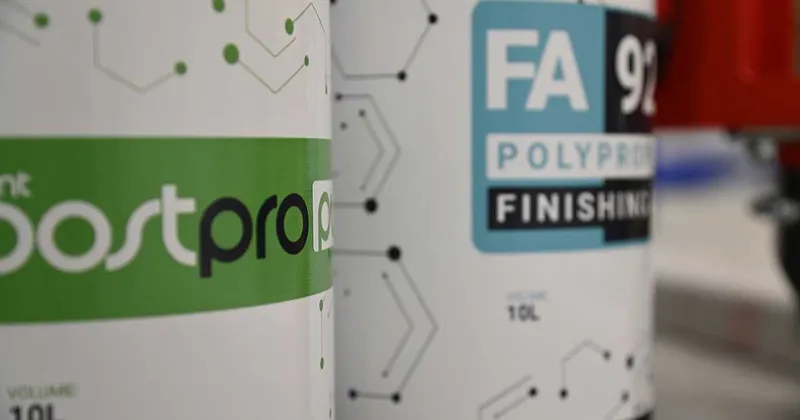
PostPro Pure (FA5802) runs on the SFX, SF2X, SF50, SF1004,5,6. What its documents and tests report:
- Biodegradability: Readily biodegradable (OECD 301 B)7,820242023
- Food contact, on FABULOUS DETECT PA11 parts smoothed with PostPro Pure: Extractables well within regulatory limits under US FDA 21 CFR §177.15009
- Hazard statements: Warning · H315 causes skin irritation · H319 causes serious eye irritation82023
Read the PostPro Pure safety data sheet before use.
Want to see it on your own parts? Send us parts for a free test.
Conclusion
Smoothing turns a raw 3D print into a polished, end-use product. Sanding suits FDM prints with visible layer lines but takes manual effort. Tumbling is efficient on SLS parts but can erode fine details and misses internal channels. Acetone vapor suits ABS but not the more chemically resistant plastics, and it carries real health and fire risks. Automated vapor smoothing suits SLS, MJF and other powder bed parts, reaches internal features, and brings 3D-printed parts close to their injection-molded counterparts.
For more detail, see what vapor smoothing is, the whitepapers with test data by material, and the PostPro vapor smoothing systems.
Questions and answers
What is the best way to smooth 3D prints?
It depends on the print process and the material. Sanding suits FDM parts with visible layer lines. Tumbling suits the rough surface of SLS parts but can wear away fine details and misses internal channels. Automated vapor smoothing suits SLS, MJF and other powder bed parts, reaches internal features and gives a sealed surface close to injection molding.
Can you smooth nylon or TPU parts with acetone?
No. Acetone vapor smoothing works on ABS. Polyamides such as PA11 and PA12, polypropylene, PLA, TPU and TPE do not react to acetone the same way. Automated vapor smoothing systems smooth them with dedicated consumables.
Is acetone vapor smoothing dangerous?
Yes, it is a hazardous process. Acetone is flammable and volatile, and inhaling its vapor is a health hazard. Wear personal protective equipment at all times and work in a well-ventilated area.
Does vapor smoothing change the dimensions of a part?
Very little. The vapor reflows the surface material instead of removing it, so fine features and part tolerances are kept.
Can vapor smoothing reach internal channels?
Yes. The vapor fills the processing chamber and condenses on every surface it can reach, including internal channels and cavities that sanding and tumbling media cannot reach.
Which materials can be vapor smoothed?
Polyamides (PA6, PA11, PA12, including flame-retardant and filled grades), elastomers such as TPU and TPE, and polypropylene with a dedicated consumable. With FA326, the PostPro SF50 and SF100 smooth 100+ thermoplastics4
Test your parts
Send us a part. See it smoothed.
We vapor smooth your own parts and send them back with the results. No cost to evaluate · Parts returned · Typical turnaround 2–3 weeks10